Bridging the Gap in Africa’s Agricultural Value Chains
Agriculture remains central to Africa’s economy, contributing close to 20% of GDP and employing around 50% of the workforce, which is the highest share globally. The sector is dominated by smallholder farmers, who represent approximately 80% of farms in sub‑Saharan Africa and produce the majority of food consumed in the area.
Despite their importance, smallholders face persistent constraints such as limited access to finance, inputs, infrastructure, and formal markets. These challenges are reflected in a global agricultural financing gap estimated at over USD 180 billion, which disproportionately affects small-scale producers.
At the same time, Africa’s food systems are under increasing pressure from population growth, climate change, and rising import dependency. Strengthening agricultural value chains, while improving access to finance and markets, remains critical to unlocking productivity, enhancing resilience, and supporting inclusive growth.
Innovation Speaks to a Fragmented Value Chain
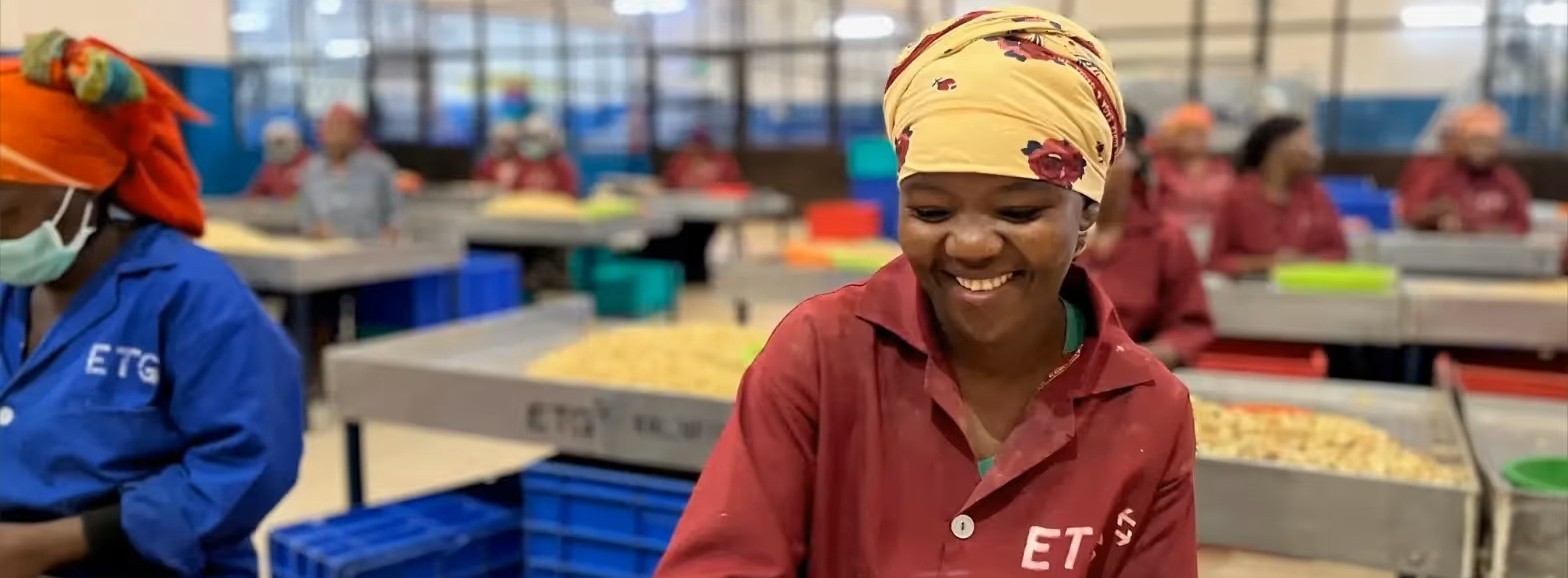
Founded in 1967 in Kenya, ETG has grown into one of Africa’s largest agricultural commodity supply chain managers, with operations in over 50 countries. Through its vertically integrated model (covering procurement, processing, logistics, and distribution), ETG connects smallholder farmers to global markets while supplying them with key inputs such as fertilizers and seeds. In fact, ETG buys more than 80% of their commodities directly from the farmers, enabling farmers to access structured markets while improving traceability and value chain efficiency. Beyond trade, ETG supports farmers through extension services, training, and sustainability programs aimed at improving productivity, increasing climate resilience, and enhancing livelihoods.
ETG is committed to ensuring that the environmental impacts of its operations and supply chains are avoided or mitigated. As its business is highly intertwined with nature, both depending on it and influencing it, they are committed to contributing to the global nature positive goal, with no net losses now and making a net positive contribution. Its sustainability report is a testament to its endeavors.
The FMO Loans
FMO has worked with ETG since 2019 and co-arranged a USD 600 mln syndicated loan to the mother company ETC Group in 2024. The facility brings together FMO and a wide and diverse group of investors, including the Fund. It supports ETG’s working capital needs while linking the interest margin to environmental and social performance targets. As a landmark sustainability-linked loan, the transaction strengthens ETG’s financing base and aligns public and private investors around a shared sustainability framework.
A broader perspective
Across Africa, agricultural systems are gradually shifting from fragmented, informal chains toward more integrated and commercially viable models. Yet access to markets, finance and technical expertise remains a key bottleneck for scaling sustainable agribusiness.
ETG plays a central role by linking farmers to markets, improving access to inputs and embedding sustainability in value chains. Its ambition to reach one million farmers with extension services, while advancing traceability, climate resilience and inclusion, reflects the broader move toward structured and sustainable food systems.
The transaction also shows how FMO combines financial and non-financial support. Beyond financing, FMO supported ETG on environmental and social standards, compliance and its sustainability strategy, strengthening ETG’s systems and better aligning operations with international standards.
Looking ahead, ETG aims to further diversify its funding sources, strengthen its sustainability footprint and prepare for capital market access, where sustainability is increasingly becoming a “license to operate”. Together, these efforts show how finance, technical expertise and long-term partnerships can transform agricultural ecosystems, support farmers, strengthen food security and advance sustainable development in Africa.